
The difference between a tiny house and an ADU in California is not size. It is legal status, and it usually comes down to whether the structure sits on wheels or on a foundation. The tiny house movement made small, movable homes popular, but California law sorts every unit into an existing category, and that category decides where you can live in it.
A tiny house on wheels is, in California’s vocabulary, a recreational vehicle or a park trailer. State housing officials describe both as built for recreational or seasonal use, not as a permanent dwelling, and outside a mobilehome or special occupancy park you can generally live in one only where a local ordinance allows it. An accessory dwelling unit (ADU) is the opposite: a permitted home on a lot with a primary residence, with permanent provisions for living, sleeping, eating, cooking and sanitation, approved under state rules that limit what a city or county can say no to.
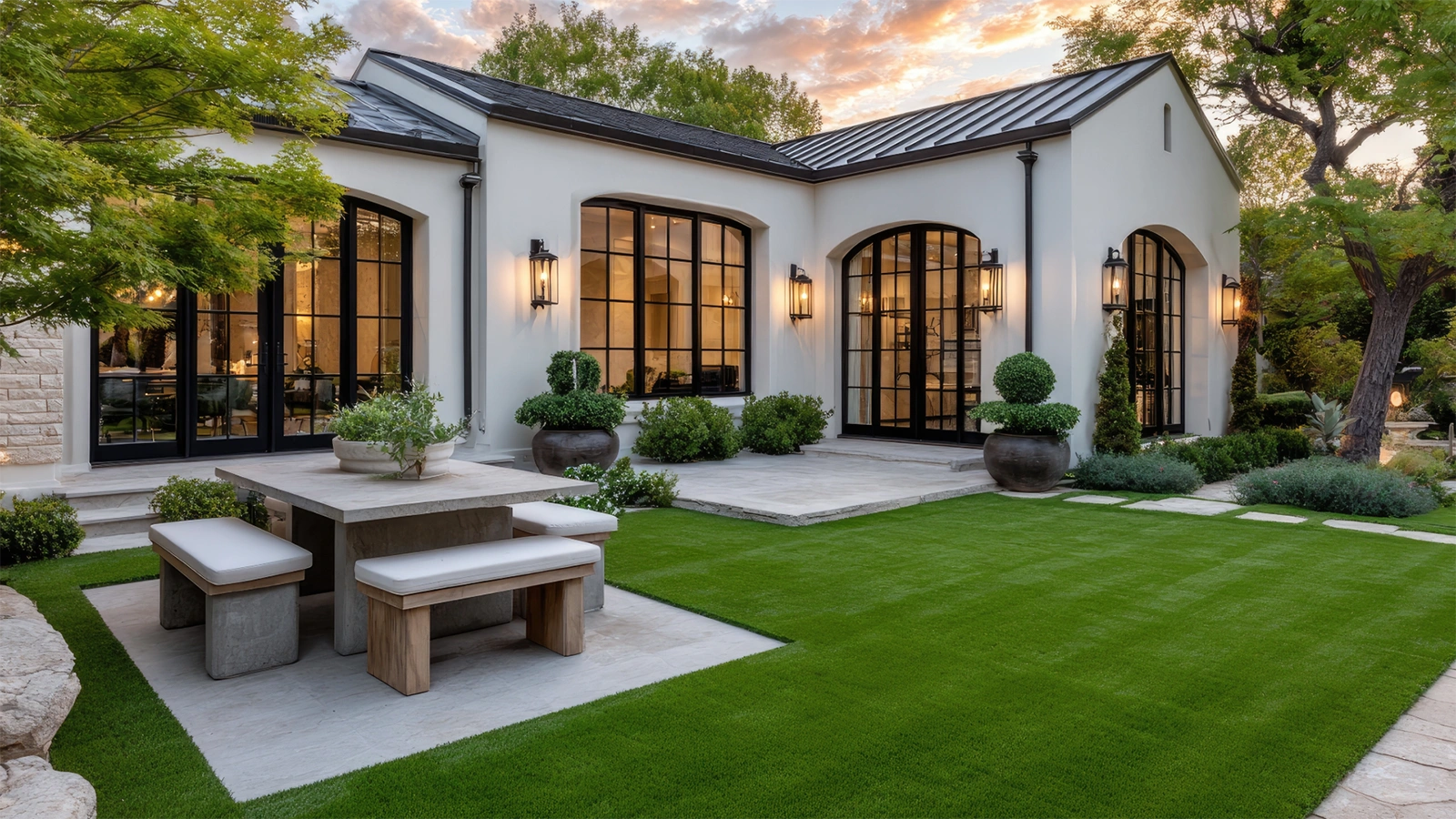
A small house on a permanent foundation, built to the building code and permitted as a dwelling, is not a third category. It is an ADU that happens to be small, and it is the kind of unit Good Life Construction builds through our ADU construction work in the Sacramento area.
Tiny house laws in California, and why ADUs differ
California has no legal category called “tiny house.” The California Department of Housing and Community Development (HCD) says so directly in Information Bulletin 2016-01 on tiny homes: no state or local agency has a specific definition for tiny homes as a product, so a tiny home is legal to live in only if it fits one of the categories that already exist. Those are a recreational vehicle (including a park trailer), a manufactured home, factory-built housing, or a dwelling built to the California Building Standards Code. Anything that fits none of them is, in HCD’s words, a noncomplying structure in which occupancy is illegal.
HCD’s March 2026 ADU Handbook answers “Are tiny homes considered ADUs?” with one word, “Possibly.” The condition is that the unit meets the ADU definition in state law. The Handbook also calls “tiny home” an industry term that can mean different structures or vehicles. The same logic applies to backyard units sold as granny pods: the sales name does not decide which category a unit falls into.
Most tiny houses sold on a trailer fall into the first category, as either an RV or a park trailer:
- Recreational vehicle. HCD’s bulletin describes an RV as having less than 320 square feet of internal living area and 400 square feet or less of gross area, and states that RVs “are not intended for occupancy as a permanent dwelling.”
- Park trailer. Health and Safety Code section 18009.3 defines a park trailer as a trailer “designed for human habitation for recreational or seasonal use only,” with 400 square feet or less of gross floor area, no more than 14 feet wide, built on a single chassis, and moved on public highways only with a permit. HCD’s bulletin adds that, unless a local ordinance allows otherwise, park trailers generally may be occupied only in mobilehome parks or special occupancy parks.
An ADU is defined in the Government Code, not the Vehicle Code or the Health and Safety Code. State ADU law sits in Government Code sections 66310 to 66342. Under Government Code section 66313, an ADU is an attached or detached home that provides complete independent living facilities on a lot with a proposed or existing primary residence. The same section says an ADU can also be an efficiency unit or a manufactured home as defined in Health and Safety Code section 18007. It does not list park trailers or RVs.
Tiny house vs ADU at a glance
| Tiny house on wheels | ADU | |
|---|---|---|
| What California calls it | Recreational vehicle or park trailer | A dwelling unit |
| Built to | RV or park trailer standards (HCD names ANSI A119.5 for park trailers) | The California Building Standards Code, or manufactured home standards |
| Intended use under state guidance | Recreational or seasonal, not a permanent dwelling | Permanent home |
| Foundation | Chassis on wheels | Permanent foundation |
| Size | Park trailer: 400 sq ft or less of gross floor area | Set by state minimums and local rules |
| Where you can live in it | Mobilehome or special occupancy parks, unless a local ordinance allows more | On the lot, once permitted and passed at final inspection |
| Approval route | Only where a local ordinance creates one | Ministerial ADU permit review: staff approval against fixed standards, with no hearing |
| State approval protections | None | Completeness check in 15 business days, a 60-day decision deadline on lots with an existing home, and height and size floors local rules cannot go below |
The ADU deadlines come from Government Code section 66317, and the height and size floors from section 66321.
What the rules look like around Sacramento
Which agency reviews your address decides what you can do, and a Sacramento mailing address does not tell you which agency that is. A property may fall under the City of Sacramento, under Sacramento County if the land is unincorporated, or under a separate city such as Elk Grove, Citrus Heights, Rancho Cordova or West Sacramento.
Unincorporated Sacramento County answers the question plainly in its Planning and Environmental Review FAQ: “Tiny homes, or homes that are either moveable or much smaller than average single-family dwellings, are not allowed unless they are placed on a permanent foundation and meet residential building codes.” In other words, in the unincorporated county the only legal backyard tiny house is one built and permitted as a house.
West Sacramento shows how the state reads local tiny-home rules. In an April 7, 2026 review of the city’s ADU ordinance, HCD told the city that to be legally recognized as an ADU, a structure must meet the California Building Standards Code or the manufactured home definition in Health and Safety Code section 18007: “No other construction standards qualify as an ADU.” Read the city’s current ordinance before you plan around a tiny home on wheels there.
Elsewhere in the state the answer swings widely. San Luis Obispo County says movable tiny houses are not allowed outside approved campgrounds or RV parks in its unincorporated areas because they do not comply with building codes, while tiny houses on permanent foundations are allowed with a county building permit. Santa Cruz County’s tiny homes page says that, following HCD guidance, tiny homes on wheels “may not be permitted as Accessory Dwelling Units (ADUs).”
The pattern across all of them is the same. Where a tiny house on wheels is allowed at all, it is allowed under a narrower local rule, not as an ADU, and without the state protections ADUs get.
Can you put a tiny house in your backyard in California?
Yes, if it is built as a house. A tiny house on a permanent foundation, built to the California Building Standards Code and permitted with its own kitchen and bathroom, is an ADU, and state law gives it the same ministerial review and deadlines as any other ADU. Without a kitchen, a small backyard building is an accessory structure such as a studio or office, which still needs a building permit unless it falls under the narrow exemption for small sheds.
A tiny house on wheels is a different answer. You can park it in a backyard, but living in it there is legal only where your city or county has an ordinance that allows it. Around Sacramento, unincorporated Sacramento County does not.
Are granny pods legal in California?
“Granny pod” is a sales name for a small backyard unit meant for an aging parent. A granny pod is legal as a home when it is permitted as a dwelling; the name itself does not decide anything. A granny pod set on a permanent foundation and permitted as a dwelling is an ADU, often a small one-bedroom or studio. A granny pod delivered on a trailer chassis is treated like any other tiny house on wheels. If the goal is a parent living next door full time, the ADU route is the one that gives you a legal, insurable home.
What to ask before you buy a tiny house on wheels
Put these to the planning department for your address, and get the answers in writing:
- Does this jurisdiction have an ordinance that allows a tiny house on wheels or a park trailer to be lived in on a residential lot? If the answer is no, an ADU or a permitted small house is the only route to legal, permanent living space.
- If such an ordinance exists, what does it require: certification standard, tiedowns, utility connections, setbacks, parking, fire protection, and how many per lot?
- Can it be occupied year-round, and can it be rented?
If you also want to know what an ADU would take on the same lot, the questions change: which approval path applies, the local size, height and setback standards, and the fees. Our guides to California ADU laws and Sacramento ADU requirements cover those, and what an ADU is covers the definitions and types.
Tiny house on wheels vs ADU: trade-offs and cost
Where a tiny house on wheels makes sense. Mobility is a big part of the appeal behind the tiny house movement, and a tiny house on wheels moves with you. It is a vehicle rather than real property, so it does not go through plan check or turn your yard into a construction site. If what you want is a seasonal or recreational unit, parked somewhere designed for one, the classification fits the use.
What you give up with it. Unless a local ordinance says otherwise, it cannot be your permanent legal home on a residential lot. A lender or insurer may treat it as a vehicle rather than a house, so ask both before you buy. It does not carry ADU protections, and a local ordinance that allows it today can be changed.
What an ADU asks of you. It is a permitted construction project: design, plan check, inspections and time on site. Under the current California Energy Code, a newly constructed detached ADU generally needs a solar system, which HCD’s March 2026 ADU Handbook confirms (conversions and additions are treated differently). Site work such as utilities and foundation varies from lot to lot. And it stays where it is built.
What about cost? In 2026, a builder-made tiny house on wheels sold in California typically costs about $70,000 to $150,000, and larger or high-end models go past $180,000. Kits and DIY shells start far lower, at roughly $10,000 to $30,000 in materials. Those prices usually cover the unit only: delivery, a pad, utility hookups and any local siting approval come on top, and none of them makes the unit a legal permanent home where the rules say it is not.
A permitted ADU is priced as construction. Building an ADU in Sacramento costs about $350 per square foot for standard finishes, $450 to $500 per square foot for higher-spec units, and $600 or more per square foot for luxury units, based on Good Life Construction’s 2026 pricing. Those tiers cover construction and design; permit and impact fees, utility connections and site work are separate. If you already have a garage you can give up, converting it is usually the least expensive way to get a permitted unit: about $150 to $280 per square foot across the Sacramento market, because the slab, walls and roof already exist. Our guide to what it costs to build an ADU in Sacramento breaks those extras down. The two numbers do not buy the same thing: one buys a vehicle, the other a permitted home.
Where Good Life Construction fits
Good Life Construction is a general contractor licensed by the California Contractors State License Board (CSLB #979670, classification B, General Building). We build ADUs in the Sacramento area: detached units, attached units and conversions of existing space. Good Life Construction builds the ADU; our sister company TOV Plans and Permits handles design and permits. One example is an attached ADU in Sacramento, a 739-square-foot, two-bedroom unit with its own kitchen and bathroom, built on a reinforced raised foundation matched to the existing home; it came in at about $300,000.
If a mobile unit is what you want, start with its manufacturer and your local planning department.
Common questions about tiny houses and ADUs
Can a tiny home on wheels be considered an ADU?
Generally no. To count as an ADU, a unit must be built to the California Building Standards Code or qualify as a manufactured home. A tiny house on wheels built to RV or park trailer standards does neither.
Is a tiny house on a foundation an ADU?
It can be, if it is built to the building code, permitted as an accessory dwelling unit and has its own facilities for living, sleeping, eating, cooking and sanitation. At that point it is simply a small ADU.
How small can an ADU be?
Smaller than most people expect. State law counts an efficiency unit as an ADU, and HCD’s ADU Handbook says a local ordinance cannot set a minimum size that rules out an efficiency unit, which may be as small as 150 square feet of floor area. Building standards still apply, so a small house on a foundation has to meet the same code as any other dwelling.
What counties in California allow tiny houses?
Every county allows a tiny house built on a permanent foundation and permitted as a dwelling, because that is an ADU. For tiny houses on wheels there is no statewide list. Each city and county decides by its own ordinance, and those ordinances change, so ask the planning department for your address whether one exists and what it requires.
Do I need a permit for a tiny house?
For a tiny house on a foundation, yes, because it is a building. For a tiny house on wheels, you are dealing with vehicle rules plus whatever local siting permit your jurisdiction offers, if it offers one.
Which one can I rent out?
An ADU can generally be rented, subject to state and local rules; our ADU laws guide linked above covers the minimum rental terms. Renting a tiny house on wheels as a home depends entirely on whether a local ordinance allows anyone to live in it at all.
Next step
For permanent, permitted living space on your lot, Good Life Construction builds ADUs. Contact us or call (916) 833-1379.