
Fact-checked against current California statutes and the California Department of Housing and Community Development’s March 2026 ADU Handbook. This guide covers laws in effect through July 30, 2026; pending legislation is not included.
California law generally requires cities and counties to allow accessory dwelling units on qualifying residential and mixed-use lots with an existing or proposed primary dwelling. However, what you can build depends on the property, the approval path and valid local requirements.
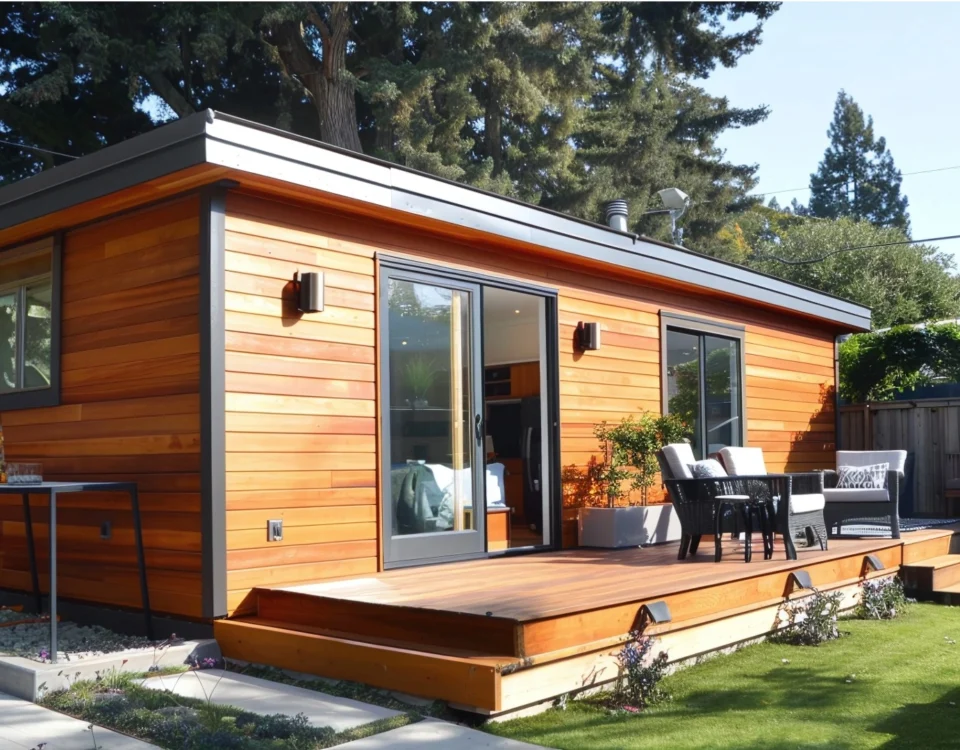
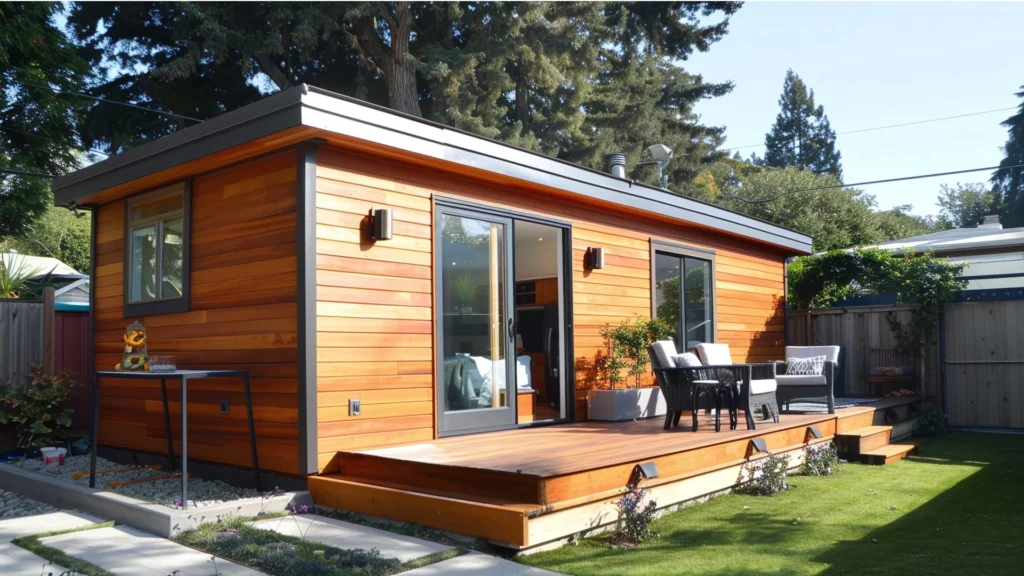
An accessory dwelling unit, or ADU, is an independent residence on the same property as a primary home or multifamily building. Your city or county—not the State of California—reviews the application and enforces applicable building, utility, fire and site requirements.
California ADU Laws at a Glance
These statewide rules are the starting point. Local requirements and property-specific conditions may still affect the final project.
| Common homeowner question | California statewide rule |
| Can I build an ADU on my California property? | Generally, yes, on qualifying residential or mixed-use lots with an existing or proposed dwelling. A city cannot impose a minimum lot size, but site and safety conditions still matter. |
| How many ADUs can a single-family lot have? | Under § 66323, a qualifying lot may have one conversion ADU, one JADU and one new detached ADU of up to 800 square feet. HCD also states that at least one § 66314 ADU must be allowed, subject to applicable objective local standards. |
| How large can an ADU be? | Local rules cannot prevent the protected 800-square-foot option. A local maximum generally cannot be below 850 square feet for a studio or one-bedroom ADU or 1,000 square feet for an ADU with more than one bedroom. |
| What are the side and rear setbacks? | A city or county generally cannot require more than four feet for a new attached or detached ADU. Qualifying conversions and same-footprint replacements may require no zoning setback. |
| How tall can an ADU be? | Local rules must generally allow at least 16 feet for a detached ADU. Greater allowances apply near qualifying transit and on certain multifamily properties. |
| Can the city require ADU parking? | Sometimes, but never more than one space per ADU or per bedroom, whichever is less. Numerous exemptions apply. |
| How long does ADU approval take? | The agency has 15 business days to determine completeness. A completed ADU application on a lot with an existing dwelling generally has a 60-calendar-day decision period. |
| Is owner occupancy required? | Generally not for a standard ADU. For a JADU, owner occupancy is generally required when it shares sanitation facilities with the primary home, but not when it has separate sanitation. |
| Can an ADU be rented? | Yes. JADUs and § 66323 ADUs must be rented for terms longer than 30 days. Other ADUs are subject to applicable local rental rules. |
| Can an ADU be sold separately? | Usually not. Separate condominium conveyance is possible only when the local government has adopted an applicable ordinance or through a narrow qualified-nonprofit pathway. |
These are statewide protections, not a property-specific approval. Sacramento-area homeowners should also review the separate guide to Sacramento ADU requirements.
Which ADU Rules Apply: State or Local?
You apply for an ADU permit through your city or county. State law determines what the local agency must allow, while local rules help determine how the ADU can fit on a particular property.
There are two main approval paths.
§ 66323 Units
Certain projects qualify as “§ 66323 units,” sometimes called state-exempt or state-mandated ADUs.
These can include qualifying conversion ADUs, JADUs, detached ADUs of up to 800 square feet and specified multifamily ADUs. A city or county cannot apply local design or development standards that § 66323 does not authorize.
These units are not exempt from building permits, inspections, building codes or applicable health-and-safety requirements.
ADUs Approved Under § 66314
Other ADUs may be approved under Government Code § 66314 and a compliant local ordinance. This path may be used for larger or more customized ADUs.
A city or county may apply objective standards for size, height, setbacks, placement, lot coverage and design. Those standards cannot conflict with state protections, unreasonably restrict ADU development or eliminate the protected 800-square-foot option.
Simple takeaway: State law determines what the city or county must allow. Local rules and property conditions determine what can practically be approved and built.
What Changed for California ADUs in 2026?
Three laws effective January 1, 2026, made important changes to ADU and JADU requirements.
Faster Application Review Under SB 543
The permitting agency has 15 business days to determine whether an ADU or JADU application is complete.
If the application is incomplete, the written notice must:
- Identify every missing item
- Explain how the application can be corrected
- Allow the applicant to submit the missing information
When the applicant responds, the agency cannot add new completeness items that were omitted from its original list. If the agency misses the 15-business-day deadline, the application or corrected resubmission is considered complete.
SB 543 also requires an appeal process for an incompleteness determination or denial. A final written appeal decision is due within 60 business days.
New JADU Rules Under AB 1154
A JADU with shared sanitation facilities generally requires owner occupancy. The owner may live in the JADU or the remaining portion of the primary home.
Owner occupancy cannot be required when the JADU has separate sanitation facilities. Limited exceptions also apply to specified government agencies, land trusts and housing organizations.
Every JADU rental must now be for a term longer than 30 days.
Stronger Local-Ordinance Enforcement Under SB 9
The 2025 version of SB 9 strengthened HCD oversight of local ADU and JADU ordinances. This is different from the earlier SB 9 law addressing duplexes and urban lot splits.
Cities and counties must submit adopted ADU ordinances to HCD within 60 days. If HCD finds that an ordinance is noncompliant, the agency must respond within 30 days. Failure to meet these requirements can make the local ordinance null and void, leaving state standards to govern ADU applications.
Coastal Permit Changes Under AB 462
AB 462 took effect on October 10, 2025, but remains especially relevant to 2026 projects.
The law retained Coastal Act protections while establishing a 60-day decision period for completed ADU coastal development permit applications. Local government or California Coastal Commission review must generally occur concurrently with the underlying ADU application, subject to statutory exceptions.
SB 543 also clarified interior-livable-space terminology, allowable ADU combinations, impact-fee protections and fire-sprinkler rules. These changes did not eliminate property-specific building, fire, utility or safety review.
Official sources: SB 543, AB 1154, Government Code § 66329 and the March 2026 HCD ADU Handbook.
What Should You Check Before Paying for ADU Plans?
Before selecting a floor plan or paying for full construction drawings, confirm:
- Which city or county has permitting authority
- Whether the property is considered single-family or multifamily
- Whether the project may use § 66323 or § 66314
- The number and types of units already on the property
- Property lines, easements and existing structures
- Sewer, water, electrical and gas capacity
- Fire access, building separation and emergency access
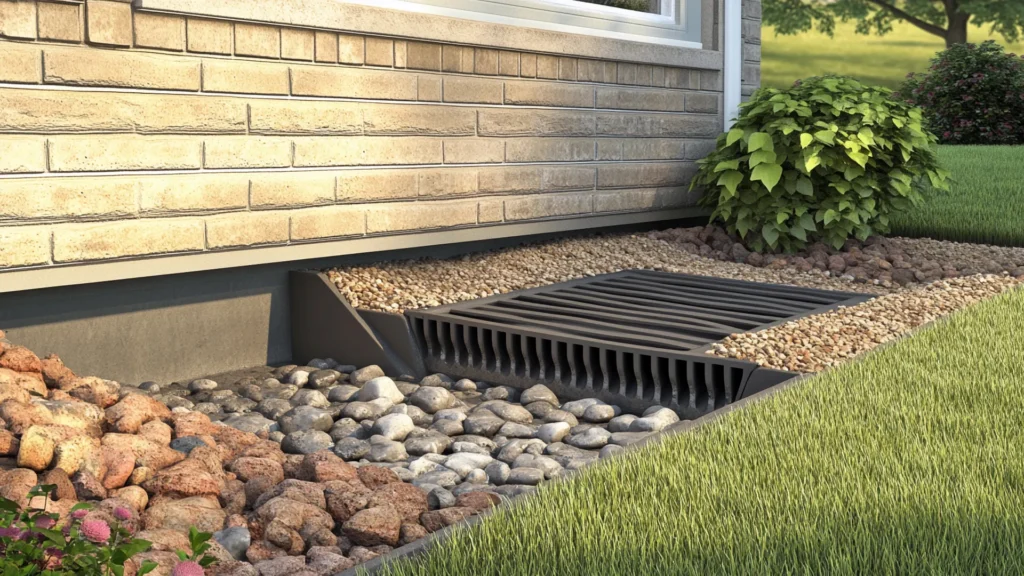
- Drainage, flood, slope and septic conditions
- Coastal, historic, HOA or fire-hazard requirements
- Whether a local preapproved plan is suitable for the property
This early feasibility review can prevent an owner from paying for a design that cannot be built on the available site.
What Types of ADUs Can You Build?
California recognizes several common ADU configurations:
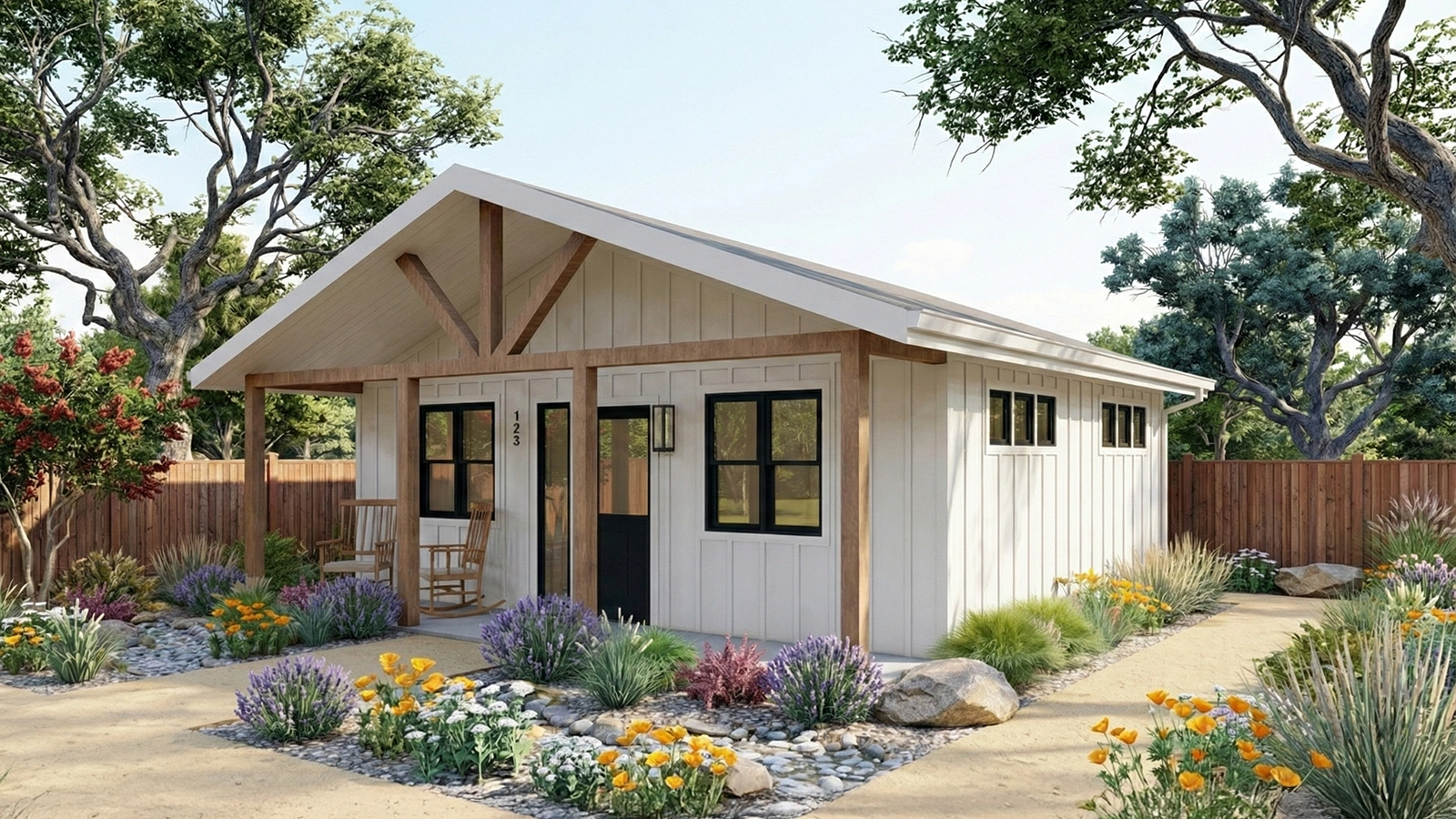
- Detached ADU: A separate residential building on the same lot as the primary dwelling.
- Attached ADU: A unit structurally connected to the primary dwelling.
- Conversion ADU: A unit created from qualifying existing space in a home, garage or other accessory structure.
- Junior ADU: A unit of no more than 500 square feet contained within a proposed or existing single-family residence, including an attached garage.
A JADU requires a separate entrance and an efficiency kitchen. It may have a private bathroom or share sanitation facilities with the primary home.
How Many ADUs Can You Build in California?
There is no single maximum for every property. The number depends on whether the lot is single-family or multifamily and which approval path applies.
Under Government Code § 66323, California requires cities and counties to allow the following combinations when all applicable requirements are met:
| Property type | Units protected under § 66323 |
| Qualifying single-family lot | One ADU created within a proposed or existing home or qualifying accessory structure; one JADU of up to 500 square feet within the home; and one new detached ADU of up to 800 square feet |
| Existing multifamily property | ADUs within qualifying existing non-livable space—at least one and up to 25% of the existing primary-unit count—plus up to eight detached ADUs, but never more detached ADUs than existing primary units |
| Proposed multifamily development | Up to two detached ADUs |
An ADU created from an existing accessory structure may expand by up to 150 square feet when the expansion is necessary to provide ingress and egress.
These combinations are not necessarily the property’s final maximum. HCD states that a local agency must also allow at least one ADU under § 66314. Objective local design and development standards may apply to that unit.
This does not mean every single-family property can automatically support four additional units. Available space, qualifying existing areas, utilities, access, fire requirements and other building and safety conditions still control what can be approved.
Official sources: Government Code § 66323, Government Code § 66314 and the HCD ADU Handbook.
California ADU Size Requirements
California does not establish one maximum ADU size for every property.
A local government also cannot impose a minimum lot-size requirement for an ADU. However, the lot must still be able to satisfy applicable building, fire, access, utility and safety requirements.
| ADU situation | Statewide size rule |
| Protected ADU option | Lot coverage, floor-area ratio, open-space rules, front setbacks and percentage-based limits cannot prevent an ADU of at least 800 square feet with four-foot side and rear setbacks that complies with other applicable standards |
| Compliant local ordinance | A local maximum cannot be below 850 square feet for a studio or one-bedroom ADU or 1,000 square feet for an ADU with more than one bedroom |
| No compliant local ordinance | A new detached ADU may be up to 1,200 square feet. An attached ADU may generally be limited to 50% of the existing primary dwelling, but the protected 800-square-foot option must remain available |
| Qualifying conversion | A § 66323 conversion is not subject to a local ADU size limit, although the existing structure and applicable building and safety codes still control feasibility |
| JADU | A JADU may contain no more than 500 square feet of interior livable space |
Why Does California Law Mention Both 800 and 850 Square Feet?
The numbers protect different things:
- 800 square feet is the ADU size that certain zoning and development standards cannot prevent.
- 850 square feet is the lowest maximum size a compliant local ordinance may establish for a studio or one-bedroom ADU.
- 1,000 square feet is the lowest local maximum for an ADU with more than one bedroom.
The 850- and 1,000-square-foot figures are not minimum required unit sizes.
An existing accessory structure converted into an ADU may also be expanded by up to 150 square feet, but only when the expansion is needed for ingress and egress.
A local agency may allow larger ADUs. Do not treat 1,200 square feet as a universal statewide maximum without reviewing the applicable ordinance.
Contractor reality check: Protected square footage does not guarantee that every floor plan will work. Interior layout, wall thickness, fire separation, utilities, structural requirements and access can affect the usable design.
Official source: Government Code § 66321.
California ADU Height and Setback Requirements
California does not establish one universal maximum ADU height. Instead, state law sets minimum heights that local rules must allow.
| ADU situation | Height local rules must allow |
| Detached ADU: general rule | At least 16 feet |
| Detached ADU within one-half mile walking distance of qualifying transit | At least 18 feet, plus up to two additional feet when needed to align the roof pitch with the primary dwelling |
| Detached ADU on a lot with an existing or proposed multistory multifamily dwelling | At least 18 feet |
| Attached ADU | The lower of 25 feet or the local zoning height limit applying to the primary dwelling |
These are protected allowances, not universal maximums. A local ordinance may permit taller ADUs.
A two-story ADU must be allowed when it fits within the applicable height limit and complies with building standards. State law does not require a city or county to approve more than two stories.
ADU Setback Requirements
New attached or detached ADU: A city or county generally cannot require more than four feet from the side and rear property lines.
Conversion or same-footprint replacement: No zoning setback is required for an ADU created within qualifying existing living area or an accessory structure, or for a replacement constructed in the same location and to the same dimensions.
Front setback under § 66314: A local front-yard setback may apply, but it cannot eliminate the protected 800-square-foot ADU. If that unit cannot fit elsewhere, it must be allowed within the front setback.
Units under § 66323: Local zoning standards, including a local front-yard setback, generally cannot be applied unless § 66323 specifically authorizes them.
Contractor reality check: A four-foot zoning setback is not the only placement requirement. Building-code separation, eaves, fire access, drainage, utility conflicts, recorded easements and construction access may require additional space.
California ADU Parking Rules
A city or county may require ADU parking only when no state exemption applies.
When parking may be required:
- The maximum is one space per ADU or per bedroom, whichever is less.
- Guest parking cannot be required.
- Parking must generally be allowed in a setback or in tandem.
- An agency may restrict setback or tandem parking only after making applicable site, topographical or fire-and-life-safety findings.
When Is No ADU Parking Required?
A local agency cannot require parking when:
- The unit qualifies under Government Code § 66323.
- The ADU is within one-half mile walking distance of public transit.
- The ADU is within an architecturally and historically significant historic district.
- The ADU is part of a proposed or existing primary residence or accessory structure.
- On-street parking permits are required but are not available to the ADU occupant.
- A car-share vehicle is located within one block.
- The ADU application is submitted with a new single-family or multifamily dwelling and another statutory parking exemption applies.
- The proposed unit is a JADU.
Is Replacement Parking Required?
No. When a garage, carport, covered parking structure or uncovered parking space is converted or removed as part of an ADU project, the city or county cannot require those spaces to be replaced.
Official source: Government Code § 66322.
ADU Permits and Approval Timelines
ADU and JADU applications receive ministerial review. The agency applies objective requirements without a discretionary hearing, but a complete permit application is still required.
| Review stage | Statewide requirement |
| Completeness review | The permitting agency has 15 business days to determine whether an ADU or JADU application is complete |
| Incomplete application | The written notice must list every missing item and explain how to correct it |
| Corrected resubmission | The agency cannot add new completeness items omitted from its original notice |
| Missed completeness deadline | The application or corrected resubmission is considered complete |
| ADU decision | On a lot with an existing dwelling, the agency generally has 60 calendar days after receiving a completed ADU application |
| Missed ADU decision deadline | An ADU application governed by § 66317 is considered approved if the agency does not approve or deny it within 60 days |
| JADU decision | A completed JADU application on a lot with an existing single-family home has a separate 60-day decision deadline under § 66335 |
| Appeal | A final written decision is due within 60 business days after the agency receives the written appeal |
Section 66335 does not expressly state that a JADU-only application is deemed approved when its 60-day deadline is missed. Homeowners dealing with a missed JADU deadline should use the local appeal process or obtain project-specific guidance.
If an ADU application is submitted with a new primary-dwelling application, the agency may delay its ADU decision until it acts on the new dwelling. A delay requested by the applicant pauses the applicable review period.
A denial must include the complete set of reviewer comments, identify defective or deficient items and explain how the application can be corrected.
Do Preapproved ADU Plans Receive Faster Review?
A completed application for a detached ADU receives a 30-day ministerial decision period when it uses:
- A plan preapproved by the same local agency during the current three-year California Building Standards Code cycle; or
- A plan identical to one used for a detached ADU approved by that agency during the same code cycle.
A preapproved plan does not eliminate site-specific foundation, utility, fire, structural or building-code review.
These are permit-decision deadlines, not complete project timelines. After construction, the ADU or JADU must pass required inspections and receive a certificate of occupancy before residential use.
Official sources: Government Code § 66317, Government Code § 66335 and Government Code § 65852.27.
ADU Fees, Utilities, Solar, and Fire Sprinklers
These rules affect project costs, utility planning, and construction requirements.
| Topic | California requirement |
| Impact fees | No impact fees for an ADU of 750 square feet or less or a JADU of 500 square feet or less. Fees for a larger ADU must be proportional to its size compared with the primary dwelling. |
| School fees | An ADU or JADU with less than 500 square feet receives an express school-fee exemption. Confirm possible fees for a unit of 500 square feet or more with the applicable school district. |
| Utility connections | A qualifying conversion ADU or JADU generally cannot be required to install a separate utility connection. Other new ADUs may require one, but connection and capacity charges must reflect the ADU’s proportional impact on the system. |
| Solar panels | A newly constructed detached ADU generally must meet current solar requirements unless an exception applies. Panels may be installed on the ADU or the primary home. Conversions and ADUs treated as additions are generally exempt from the new-building solar requirement. |
| Fire sprinklers | Sprinklers cannot be required for an ADU or JADU when they are not required for the primary residence. Building an ADU also cannot trigger a sprinkler requirement for the existing home. |
An impact-fee exemption does not eliminate permit, plan-check, inspection, utility, or other applicable project charges.
Official sources: Government Code § 66311.5 and the California Energy Commission’s ADU guidance.
Do You Have to Live in, Rent, or Sell an ADU?
Do you have to live on the property?
A standard ADU generally has no owner-occupancy requirement.
For a JADU, owner occupancy is generally required when it shares sanitation facilities—usually a bathroom—with the primary home. It cannot be required when the JADU has separate sanitation facilities.
When owner occupancy applies, the owner may live in either the JADU or the remaining portion of the home. Limited exceptions apply to specified government agencies, land trusts, and housing organizations.
Can you rent an ADU?
Yes. An ADU may generally be rented separately from the primary home.
A JADU or an ADU approved under § 66323 must be rented for a term longer than 30 days. Other ADUs remain subject to applicable local rental and short-term-rental regulations.
Do not assume that vacation-rental use is allowed.
Can you sell an ADU separately?
Usually not. Separate sale is possible only through limited legal pathways.
A local government may adopt an ordinance allowing an ADU and primary residence to be sold separately as condominiums. A narrow pathway also exists for certain qualified nonprofit organizations.
A JADU cannot be sold separately and requires a recorded deed restriction. An ADU condominium sale is not a lot split and may require local approval, lender consent, condominium documents, and professional legal, tax, and title advice.
Read the complete guide to selling an ADU separately under AB 1033 before including a separate sale in your financial plan.
Properties That Need Extra ADU Review
Some properties require additional review even when the proposed ADU qualifies under state law.
- Coastal properties: State ADU law applies in the Coastal Zone, but a coastal development permit and Coastal Act requirements may still apply. A local government or the California Coastal Commission generally has 60 days to decide a completed ADU coastal permit application. Different timing may apply when the ADU is submitted with a new primary dwelling.
- Historic properties: A city or county may apply objective standards intended to protect a property listed in the California Register of Historical Resources. Historic status can also affect parking exemptions, demolition, and local design requirements.
- Fire-hazard areas: A High or Very High Fire Hazard Severity Zone designation does not automatically prohibit an ADU. However, fire access, available water, defensible space, building materials, and other documented safety conditions may affect the design or feasibility.
- HOA and condominium properties: California law generally prevents covered HOA and CC&R restrictions from effectively prohibiting or unreasonably restricting ADUs or JADUs on qualifying single-family-zoned lots. Reasonable restrictions may remain, but they cannot include ADU-related fees or financial requirements. A 2026 San Diego trial-court ruling created uncertainty for certain condominium properties, but it is not binding statewide precedent. Condominium owners should obtain current property-specific advice.
- Easements and utility conflicts: State ADU protections do not eliminate recorded easements, drainage paths, sewer-capacity limits, utility conflicts, or construction-access problems. Investigate these conditions before choosing the ADU’s location.
- Previously unpermitted ADUs: A local agency generally cannot deny legalization of an ADU or JADU constructed before January 1, 2020, solely because it violates building standards, ADU law, or a local ADU ordinance. Health-and-safety problems may still require correction or support denial. Homeowners may obtain a confidential inspection from a licensed contractor before applying.
- Mobilehome parks and Tahoe-area properties: State ADU law does not authorize ADUs on individual lots within mobilehome or special occupancy parks. Properties governed by the Tahoe Regional Planning Agency may also be subject to separate regional requirements.
California ADU Planning Checklist
Before paying for plans or beginning construction:
- Identify the permitting agency. Confirm whether the city or county has jurisdiction and whether the property is single-family or multifamily.
- Choose the ADU type and approval path. Compare detached, attached, conversion, and junior ADUs, along with the § 66323 and § 66314 pathways.
- Confirm what fits. Verify the permitted unit count, size, height, setbacks, access, and placement.
- Investigate the site. Map property lines, existing structures, easements, drainage, utilities, and construction access.
- Check special requirements. Review electrical, water, sewer or septic capacity, along with fire, flood, coastal, historic, and HOA conditions.
- Prepare the project plan. Compare preapproved and custom designs, build a complete budget with contingency, and use an appropriately licensed contractor.
- Complete the permit process. Obtain required permits, inspections, and a certificate of occupancy before using the ADU as a residence.
For local budgeting guidance, see the cost to build an ADU in Sacramento.
Frequently Asked Questions
Can every California property have an ADU?
No. California protects ADUs on many qualifying residential and mixed-use properties, but it does not guarantee that every lot can support every type of ADU.
Zoning, existing development, utilities, access, easements, health-and-safety requirements and special regulatory frameworks can affect feasibility.
Is there a minimum lot size for an ADU in California?
No. A city or county cannot impose a minimum lot-size requirement for an ADU.
The property must still provide a feasible location that complies with applicable building, fire, utility, access and safety requirements.
Can a city deny an ADU application?
Yes, if the project does not comply with applicable objective or health-and-safety requirements.
The agency must provide written comments identifying defective or deficient items and explaining how the application can be corrected. For an ADU governed by § 66317, failure to approve or deny a completed application within the 60-day period results in deemed approval.
Can an ADU be built in the front yard?
Potentially.
A local front-yard setback cannot eliminate the protected 800-square-foot option under § 66321. Units qualifying under § 66323 generally cannot be subjected to a local front-yard setback unless that section authorizes it.
Building, fire, utility, easement and access requirements still apply.
Can an HOA stop an ADU?
Not necessarily. California law voids unreasonable restrictions on qualifying ADUs and JADUs on covered single-family residential lots, but reasonable restrictions may remain.
Condominiums and other common-interest developments can involve additional legal questions. Review the property’s zoning and governing documents before beginning work.
Can I legalize an ADU built without permits?
Possibly.
California provides important protections for qualifying ADUs and JADUs constructed before January 1, 2020. Health-and-safety or substandard-building conditions may still require correction or support denial.
Start with the local legalization checklist and consider obtaining a confidential inspection from a licensed contractor before applying.
This article provides general information and is not legal, tax, lending, insurance or title advice. California law and local requirements can change. Confirm the rules for your property with the applicable city or county and qualified professionals before making construction or financial decisions.