
Quick Answer: What Is the Best Way to Paint a Deck?
The best way to paint a deck is to inspect it for damage, clean it thoroughly, remove all loose or peeling paint, sand rough areas, repair any issues, prime bare wood where needed, and apply thin, even coats in the correct order. Start with railings, then move to deck boards, and finish with stairs. Do not paint over damp wood or failing surfaces if you want a durable finish.
A long-lasting deck paint job depends more on preparation than the paint itself. When the surface is clean, dry, and stable, the coating bonds properly and holds up much longer.
How to Paint a Deck Step by Step
- Inspect the Deck
Check the deck for cracked boards, soft spots, loose fasteners, unstable railings, and damaged stairs.
Fix these issues before painting. Paint will not hide or solve structural problems.
- Clean the Surface Thoroughly
Remove furniture and debris, then wash the deck with a wood cleaner or pressure washer on a controlled setting.
This removes dirt, mildew, and residue that can prevent proper adhesion. Let the deck dry fully before moving on.
- Remove Loose or Peeling Paint
Scrape off any peeling, flaking, or bubbling paint.
You do not need to remove every layer, only the paint that is no longer bonded well. Use a wire brush for edges and tight spots.
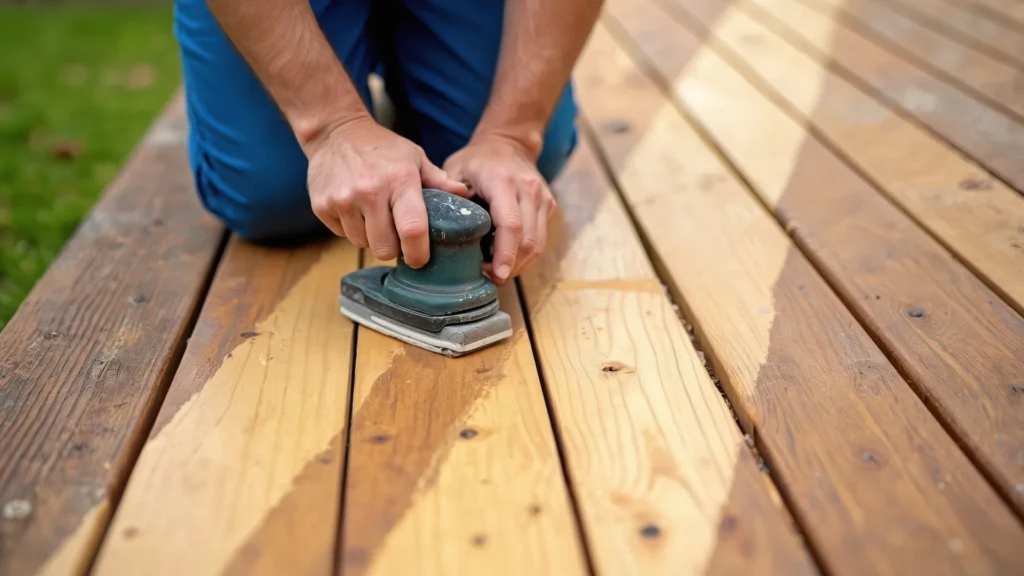
- Sand Rough Areas and Feather the Edges
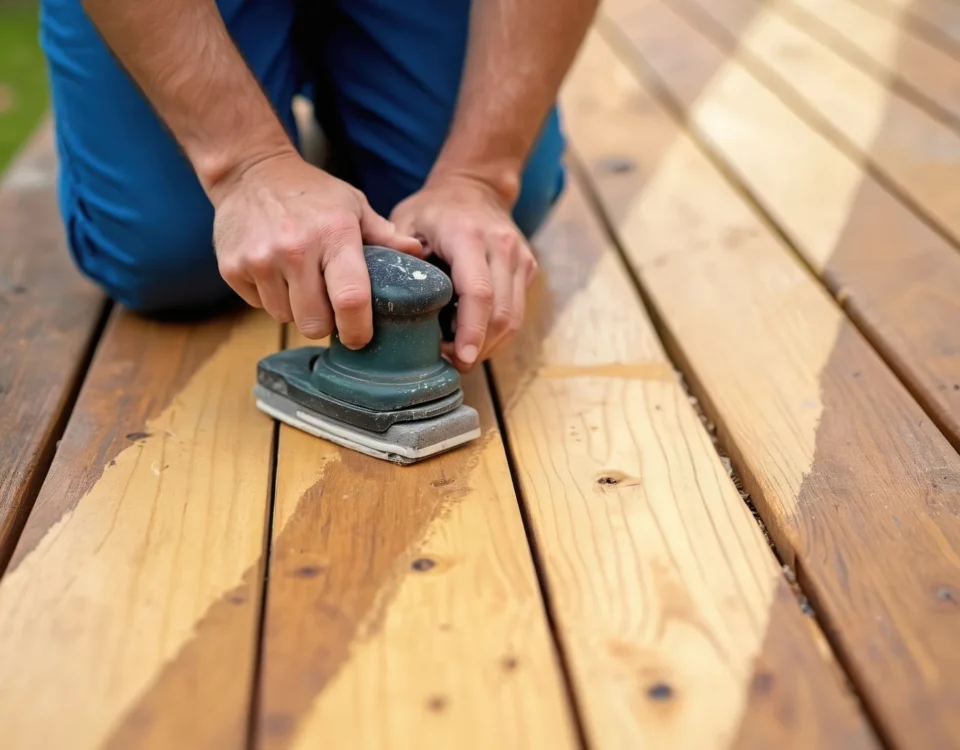
Sand scraped areas, splintered boards, and rough transitions between old paint and bare wood.
This helps the new paint go on more evenly and reduces visible patch lines. If you need more detailed prep advice, see our guide on how to sand a deck.
- Repair Surface Damage
Replace rotten boards, tighten loose fasteners, and fill small cracks or holes with exterior wood filler.
Good repairs improve both the look of the deck and the life of the finish.
- Prime Bare or Problem Areas
Apply primer to exposed wood, repairs, and uneven sections.
This helps the paint bond better and creates a more even final coat.
- Paint the Railings First
Start with the railings and work from top to bottom.
Use a brush for control, apply light coats, and smooth out drips as you go.
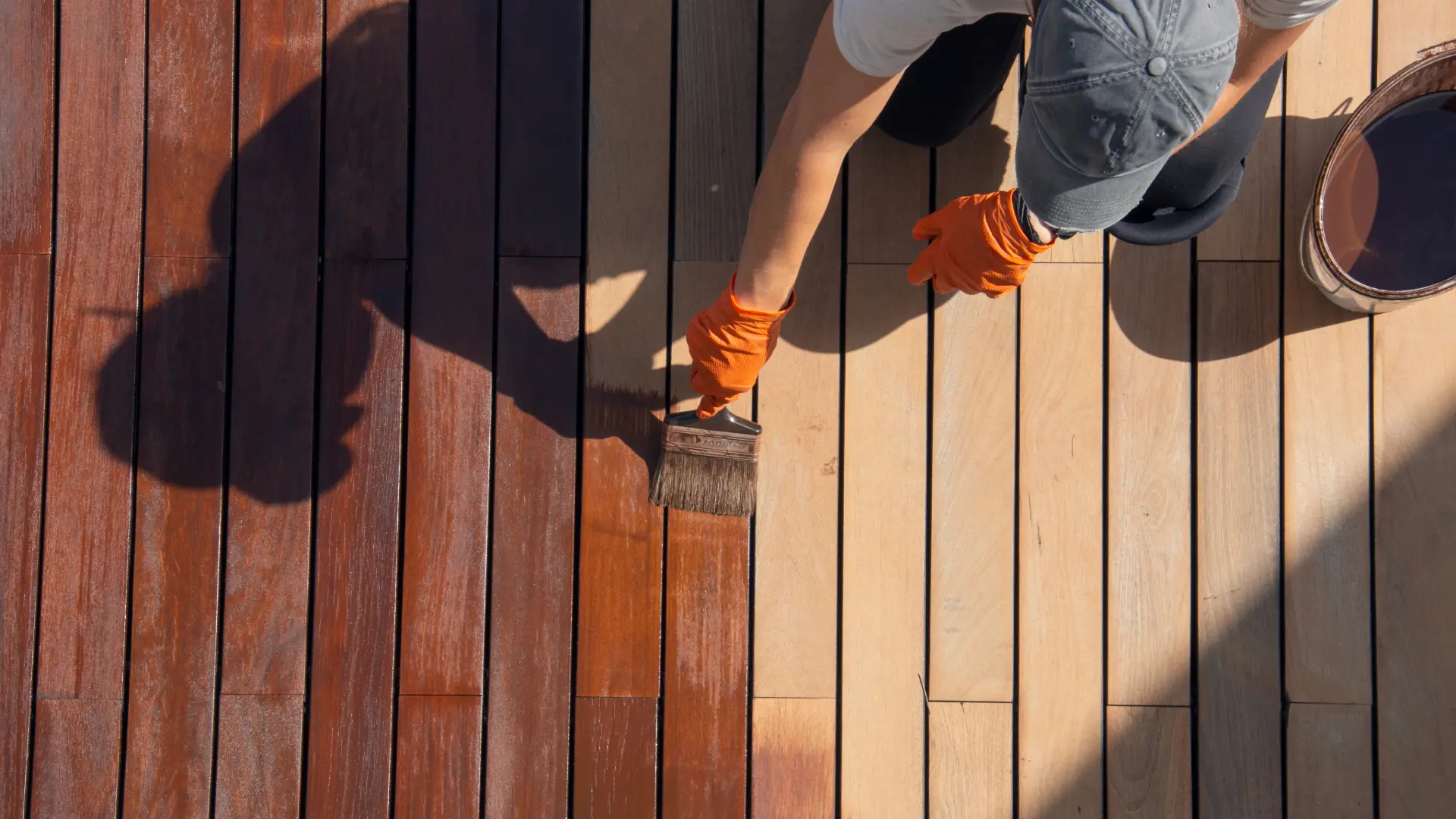
- Paint the Deck Boards Next
Paint the boards after the railings, following the board direction.
Work a few boards at a time, keep a wet edge, and use thin, even coats.
- Finish With the Stairs
Paint the stairs last, starting at the top and working down.
Use a brush on edges and a roller on flat treads if needed. Leave yourself a clear way off the deck.
Let the Paint Dry and Cure Fully
Let each coat dry as directed, and give the finish enough time to cure before heavy use.
A deck that feels dry is not always ready for furniture or regular foot traffic.
If peeling is widespread or the old finish is breaking down across most of the surface, it may be smarter to learn how to refinish a deck instead of repainting over a failing coating.
What You Need to Paint a Deck
Most deck painting projects require basic tools and materials, including a broom or blower, pressure washer or hose, paint scraper, wire brush, sanding block or orbital sander, angled brush, roller with extension pole, paint tray, and safety gear.
You will also need deck cleaner, primer, wood filler or repair compound, and an exterior deck paint designed for foot traffic and outdoor exposure.
What Kind of Paint Should You Use on a Deck?
Use a paint specifically designed for exterior decks, porches, or floors. It should be rated for foot traffic, moisture, and UV exposure.
Acrylic latex paint is a common choice because it is easier to apply and more forgiving. Avoid using standard exterior wall paint, as it is not designed to handle the wear and movement of a deck surface.
Best Order to Paint a Deck
The most effective order is:
- Railings and balusters
- Trim and edges
- Deck boards
- Stairs
This sequence helps prevent drips and keeps your workflow organized.
How to Remove Paint Off a Deck
Removing paint from a deck depends on the condition of the existing coating. In most cases, you do not need to strip the entire surface to bare wood. The goal is to remove all paint that is no longer bonded.
Start with scraping. Use a paint scraper to lift peeling, flaking, or bubbling areas. This is the most direct way to remove failing paint.
Next, sand the surface to smooth edges and remove stubborn remnants. Sanding also prepares the surface for a new coating.
If there are thick or multiple layers of old paint, a chemical stripper may be useful. Apply it according to instructions, then scrape and clean the surface thoroughly.
Pressure washing can also help remove loose paint, but it must be used carefully. Too much pressure can damage the wood.
Most decks require a combination of scraping, sanding, and selective stripping. Focus on creating a clean, stable surface rather than removing every trace of old paint.
How to Repaint a Deck
Repainting a deck is similar to painting it for the first time, but the key difference is evaluating the existing coating.
If most of the paint is still well bonded, you can repaint without stripping everything. Start by cleaning the surface thoroughly, then remove any loose or failing paint.
Sand rough transitions, make necessary repairs, and prime any exposed wood or patched areas. Once the surface is clean, dry, and stable, apply new paint in thin, even coats.
Repainting early, when only small areas are failing, is much easier and more effective than waiting until the entire surface is peeling.
How to Repaint a Deck With Peeling Paint
Peeling paint usually indicates poor preparation, moisture issues, or too many unstable layers.
The correct approach is to remove all peeling paint, feather the edges, allow the wood to dry fully, and repair any damaged areas. Prime exposed wood and apply new paint in controlled, even coats.
Painting over peeling areas will not fix the problem. The new coating will fail quickly if the surface underneath is not stable.
Best Weather for Painting a Deck
The best conditions for painting a deck include mild temperatures between about 50 and 85 degrees, dry wood, and low humidity.
Avoid painting when rain is expected within 24 to 48 hours. Also avoid painting in direct hot sun, as the paint can dry too quickly and create uneven results.
Can You Paint a New Deck?
You can paint a new deck, but not always immediately. Pressure-treated wood often contains moisture and needs time to dry before it can hold paint properly.
Wait until the wood feels dry and no longer shows signs of moisture. Painting too soon can trap moisture and lead to peeling.
Do You Need to Strip a Deck Before Painting?
You do not always need to strip a deck completely. Stripping is usually only necessary when the old coating is failing across large areas or when multiple layers are unstable.
If most of the paint is still bonded, you can remove only the failing areas and repaint successfully.
How Much Does It Cost to Paint a Deck?
The cost depends on deck size, condition, materials, and whether you do the work yourself or hire a professional.
DIY projects usually involve the cost of paint, primer, and supplies, which can range from a few hundred dollars. Professional work costs more and depends on labor, prep work, repairs, and complexity.
A deck that requires extensive prep or repairs will cost more than a simple repaint.
Common Mistakes to Avoid
Common mistakes include painting over dirt or mildew, painting damp wood, skipping scraping or sanding, using the wrong type of paint, applying coats too thick, and rushing drying time.
Ignoring small repairs or placing furniture back too early can also damage the finish.
How to Make Deck Paint Last Longer
Keep the deck clean by removing debris regularly. Clean spills quickly and address mildew early.
Inspect high-traffic areas and touch up small chips before they spread. Use protective pads under furniture and avoid dragging heavy items across the surface.
Regular maintenance helps extend the life of the paint.
DIY vs. Hiring a Professional
DIY is a good option if the deck is in good condition and you have time to prepare it properly.
Hiring a professional is often better when the deck has severe peeling, requires repairs, or is large and complex. Professionals can complete the work faster and with more consistent results.
Frequently Asked Questions
Do I need to sand the whole deck before repainting?
No. You usually only need to sand scraped areas, rough spots, and transitions.
Can I repaint a deck without stripping it?
Yes, if most of the existing paint is still bonded well.
How many coats of deck paint do I need?
Most decks benefit from one to two thin, even coats.
What happens if I paint a damp deck?
The paint may not bond properly and can peel or bubble.
Is it better to spray or roll deck paint?
Rolling is better for flat surfaces. Spraying is faster but requires more control.
Conclusion
Painting a deck the right way starts with proper preparation. Inspect the structure, clean the surface, remove failing paint, sand rough areas, make repairs, and apply paint carefully in the correct order.
If you focus on preparation and avoid shortcuts, the result will look better and last longer. A clean, dry, stable surface is the foundation of every successful deck paint job.