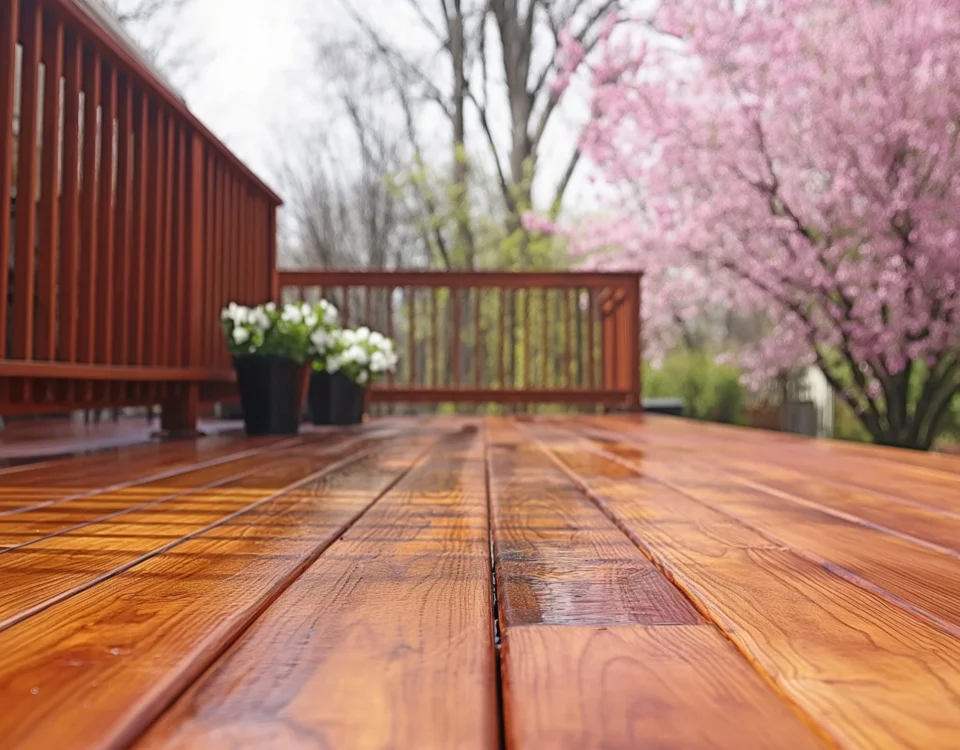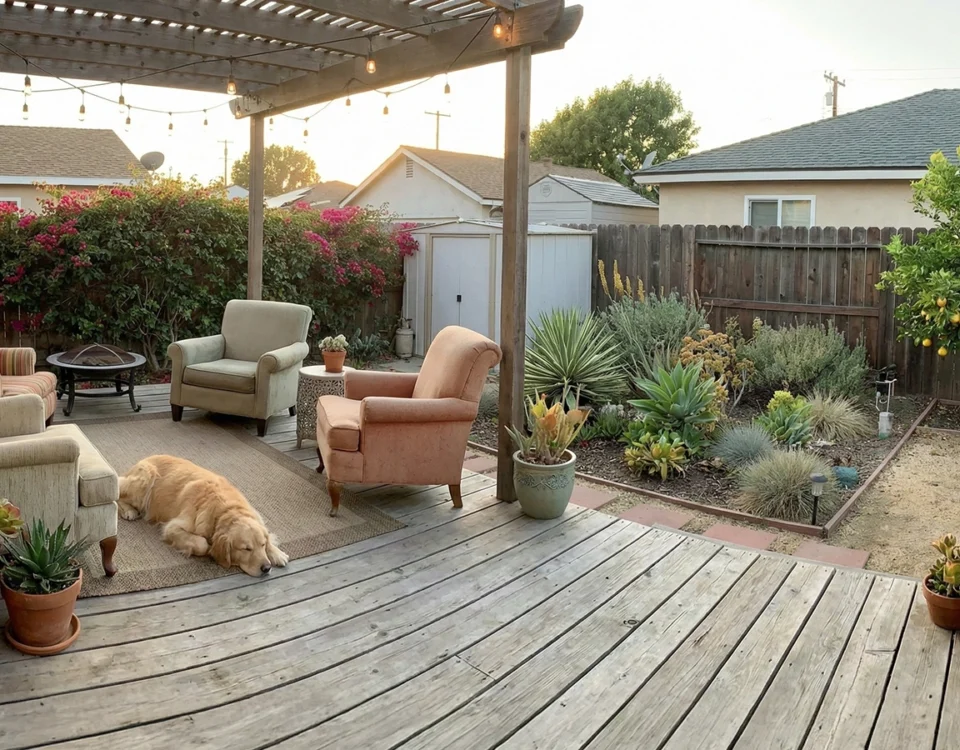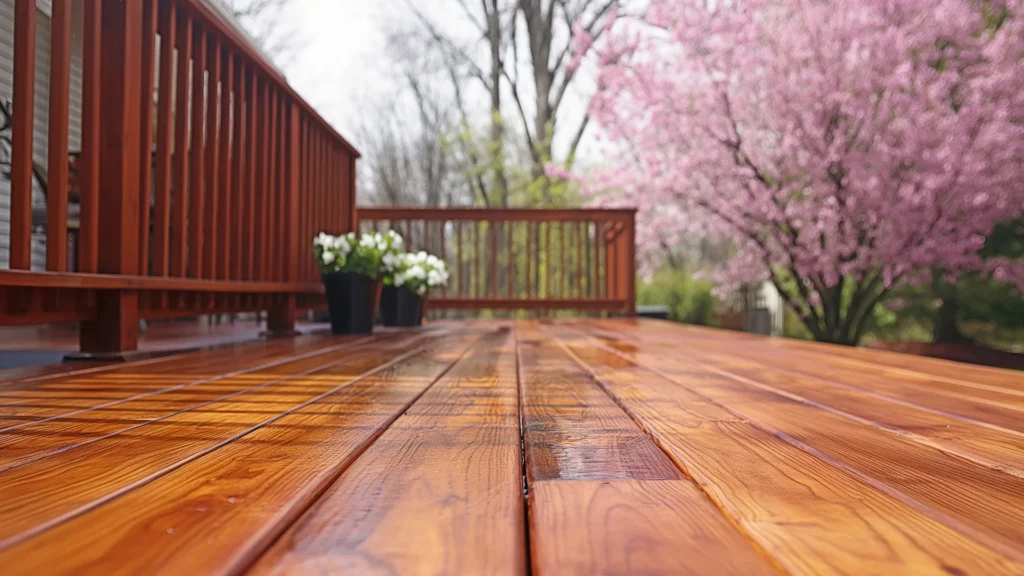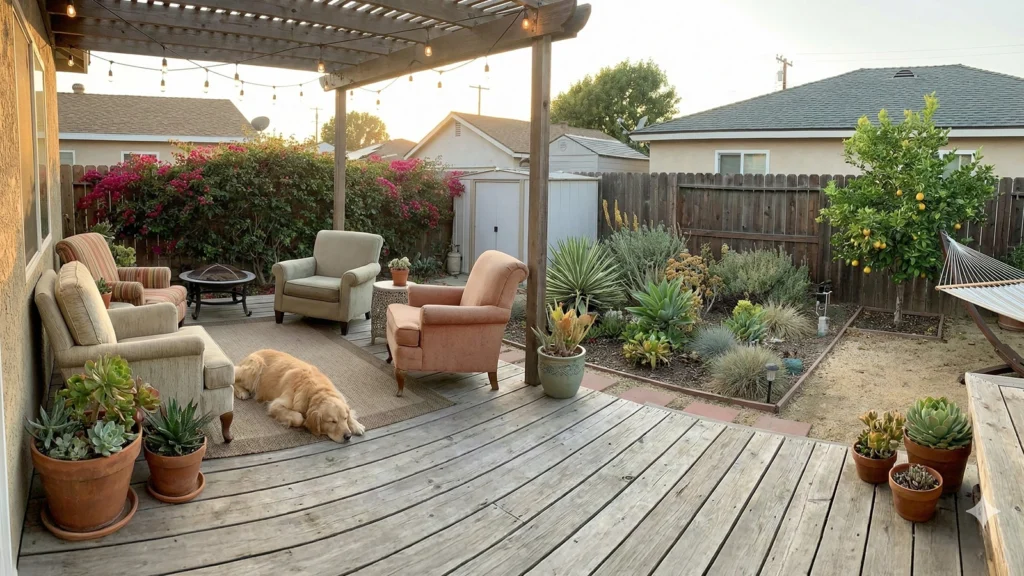

If you want to sand a deck properly, the process is simple: clean it, let it dry, inspect for damage, sand the main boards with the grain, smooth the edges and railings, remove dust, and then move on to staining or repainting.
The important part is doing each step in the right order. A good sanding job helps create a smoother surface, better finish absorption, and a cleaner final result. A rushed sanding job can leave scratches, uneven spots, or miss damage that should be repaired first.
Below is the step-by-step method, followed by everything you need to know about tools, grit, common mistakes, and when sanding is not enough.
How to Sand a Deck: Step-by-Step
1. Clear the deck completely
Remove all furniture, planters, rugs, grills, and anything else sitting on the surface. You need a fully open work area before you begin.
2. Inspect the deck before sanding
Check the deck boards, stairs, railings, and visible framing for soft spots, rot, cracks, movement, loose boards, or unstable railings.
If the wood feels soft or the structure feels loose, repair should come before sanding. Sanding is only useful when the deck is still solid enough to save.
3. Clean the surface well
Sweep away loose dirt and debris, then wash the deck with a proper deck cleaner to remove buildup, old residue, mildew, and loose finish.
Do not sand a dirty deck. Dirt and leftover residue can interfere with the sanding pattern and leave the surface less even.
4. Let the wood dry completely
The deck needs to be fully dry before sanding. Damp wood does not sand cleanly, and moisture can hide deeper problems that only show up later.
5. Scrape loose paint or failing finish
If old paint or finish is peeling, scrape off the loose material first. Sanding works best as a smoothing and prep step, not as the main method for removing heavy failure.
6. Set any raised screws or nails
Fasteners sitting above the surface can damage your sandpaper and interrupt a smooth pass. Correct those before you start sanding.
7. Sand the main deck boards first
Use a random orbital sander or deck/floor sander on the main walking surface. Start with the large, open sections before moving to edges and detail areas.
Always sand with the grain of the wood, not across it.
8. Keep the sander moving
Do not hold the sander in one place for too long. Use steady, even passes and slightly overlap each pass to avoid stripes or low spots.
Let the tool do the work. Too much pressure usually creates a worse finish, not a better one.
9. Sand corners, edges, stairs, and railings
Switch to a detail sander, sanding sponge, or hand sanding for:
- corners
- stair edges
- around posts
- board ends
- rail caps
- handrails
- narrow trim sections
These areas should blend with the main deck surface, not look rougher or more polished than the rest.
10. Remove all sanding dust
Once sanding is complete, vacuum, blow off, or sweep away all dust from the boards, edges, stairs, and railings.
This step matters. Leftover dust can affect how stain or paint bonds to the wood.
11. Inspect the deck one more time
After sanding, check again for hidden soft spots, deep cracks, loose boards, unstable railings, or other wear that may have been harder to see before.
If sanding reveals bigger issues, stop before finishing and address the repairs first.
12. Move on to staining or repainting
After sanding, the next step is to follow the full deck refinishing process so the surface is properly cleaned, finished, and protected.
At a Glance: Should You Sand It or Repair It?
| Deck Condition | Sanding Enough? | Better Next Step |
|---|---|---|
| Rough, splintered surface | Yes | Sand and refinish |
| Uneven old stain | Usually | Sand and restain |
| Minor weathering | Yes | Sand and protect |
| Peeling finish | Sometimes | Scrape, prep, then refinish |
| Soft or rotten wood | No | Repair or replace |
| Loose stairs or railings | No | Repair first |
| Deep cracks or failing boards | Usually not | Repair or replace |
When You Should Sand a Deck
Sanding is the right step when the problem is mostly on the surface.
You should sand a deck when:
- the boards feel rough or splintered
- the surface has light weathering
- the grain has raised from sun and moisture exposure
- old stain is uneven or worn down
- you want better prep before staining or repainting
- the boards are still solid and stable
A weathered deck that is still structurally sound can often look much better after proper sanding and refinishing.
When You Should Not Sand a Deck
Sanding is not the solution for every deck problem.
You should not sand a deck if you notice:
- soft or rotten wood
- loose or failing boards
- unstable stairs
- wobbly railings
- sagging areas
- popped fasteners caused by movement
- widespread splitting
- signs of moisture damage below the surface
If the wood feels spongy, flakes apart, or moves under pressure, sanding is not the right solution.
At that point, professional deck repair is the better investment.
Tools You Need to Sand a Deck
The right tools help you get a cleaner and more even result.
For most deck sanding jobs, you will need:
- random orbital sander or deck/floor sander
- detail sander or sanding sponge
- scraper for peeling paint or failing finish
- deck cleaner and stiff brush
- broom, blower, or shop vacuum
- extension cord if needed
- safety glasses
- hearing protection
- dust mask or respirator
- work gloves
For most homeowners, a random orbital sander is the easiest tool to control and the safest choice for avoiding gouges.
A larger floor sander can save time on a large deck, but it needs careful handling. Belt sanders are usually too aggressive for deck boards.
What Is the Best Grit to Sand a Deck?
One of the most common questions is: what is the best grit to sand a deck?
In general, you want a grit that smooths rough wood without making it overly polished. If the surface becomes too smooth, stain may not absorb evenly.
Best grit for deck boards
For most deck boards, a medium grit is the best place to start. If the boards are heavily weathered, you may need a slightly coarser first pass before finishing with a medium grit.
Best grit for stairs
Stair treads usually need the same general grit range as the main boards, but sanding marks show more easily here, so consistency matters.
Best grit for edges and corners
Edges and corners usually need detail sanding or hand sanding. Use a grit that blends with the rest of the deck surface.
Best grit for rail caps and handrails
Rail caps and handrails should feel smooth, but not overly polished. These are high-contact areas, but they still need to accept finish properly.
Testing a small section first is always a smart move.
Common Deck Sanding Mistakes
Many sanding problems happen because the process gets rushed.
Avoid these common mistakes:
- sanding before the deck is fully dry
- skipping the cleaning step
- using grit that is too coarse
- sanding against the grain
- pressing too hard
- leaving the sander in one place too long
- over-sanding soft wood
- ignoring corners and edges
- failing to remove dust before finishing
- trying to sand away damage that actually needs repair
A good sanding job should leave the deck smooth and even, not chewed up or overworked.
What to Do After Sanding
Once the sanding is complete:
- remove all dust from the surface
- inspect the deck again for hidden damage
- fix any problems before applying finish
- move on to staining or repainting within the right timeframe
Bare wood should not be left exposed longer than necessary.
How This Applies to Sacramento Decks
Decks in Sacramento deal with intense summer sun, dry heat, and seasonal moisture. Over time, that combination can dry out exposed wood, wear down finishes, and make surface problems appear faster.
Sometimes a deck only needs sanding and a fresh finish. In other cases, sanding reveals loose boards, stair damage, railing movement, or wood deterioration that should be repaired first.
That is why sanding should always be treated as part of a bigger maintenance decision.
Need Help With a Worn or Damaged Deck?
Sanding can dramatically improve the look of a solid deck and prepare it for staining or repainting. But it only works when the structure underneath is still in good condition.
If your deck has soft spots, loose boards, unstable railings, worn stairs, or visible damage beyond the surface, it may be time to move past sanding and fix the real issue first.
Good Life Construction helps homeowners decide whether a deck needs refinishing, targeted repairs, or a more complete rebuild. For larger replacements or full outdoor upgrades, explore our Deck Builder Sacramento services.
FAQ
Should you sand a deck before staining?
Yes, if the surface is rough, weathered, or uneven. Sanding helps create a cleaner and more even surface for stain, as long as the deck is dry, clean, and structurally sound.
What is the best grit to sand a deck?
For most decks, a medium grit is the best starting point because it smooths the wood without over-polishing it. The exact grit depends on the condition of the wood and how much old finish remains.
Can you sand a deck with an orbital sander?
Yes. A random orbital sander works well for many deck sanding projects, especially on deck boards, stairs, and smaller areas that need more control.
Do you need to clean a deck before sanding it?
Yes. Dirt, mildew, debris, and residue can interfere with sanding and make the result less even. The deck should also be fully dry before sanding begins.
When should you not sand a deck?
You should not sand a deck that has rot, soft boards, loose stairs, unstable railings, or other structural damage. Repair should come before surface prep in those cases.